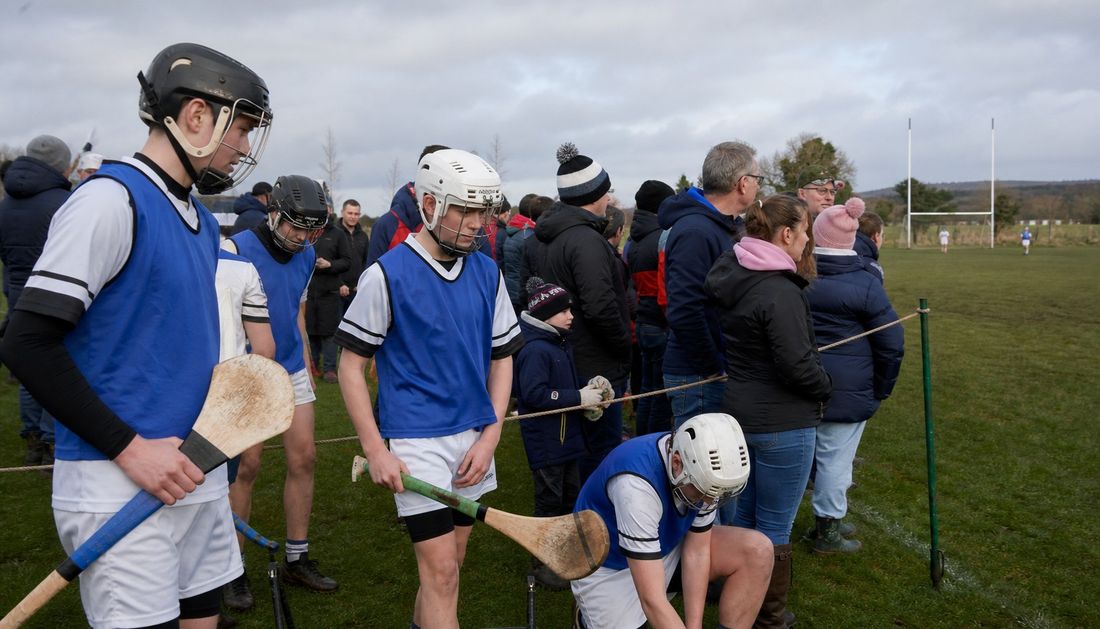
Hurling's Long History: From the Tain to the Liam MacCarthy Cup
Hurling gets described as the oldest field game in Europe so often that the claim has stopped carrying any weight. It is worth going back to what can actually be documented, because the real record is more specific — and more interesting — than the slogan.
The Game in the Literature
The best-known early reference is in the Tain Bo Cuailnge, in the section dealing with Cu Chulainn's boyhood deeds. The boy Setanta kills the hound of Culann by driving a ball into its throat with his hurley, and takes the hound's place and its name. Hurling appears repeatedly in that literature as a form of martial training, with skill on the field treated as a proxy for skill in battle.
A note of caution on dating, because it gets overstated. The language of the material is usually placed several centuries earlier than the surviving manuscripts, which are later again. The exact dating is a live argument among specialists, and anyone quoting a precise number of years is quoting a rounded estimate rather than a fixed fact.
Two Legal Records: Compensation, and a Ban
The more solid evidence is legal rather than literary. Early Irish law dealt directly with injuries sustained at sport, setting out who was liable and what compensation was owed — including for injuries caused by a camán.
There is a fragmentary early Irish legal text, Mellbretha, whose name translates as sport-judgements. What survives of it deals with accidental injury and liability across a list of around twenty-five games, hurling among them. A society does not write liability law for a pastime nobody plays. That is the strongest single indication of how embedded the game already was.
The second legal record runs the other way. The Statutes of Kilkenny, a set of thirty-five acts passed by the Parliament of Ireland at Kilkenny in 1366, attempted to arrest the gaelicisation of the Hiberno-Norman colony. Among many other prohibitions, they outlawed hurling in favour of what the text calls gentle games which appertain to arms — archery and the like.
The ban plainly did not work. But it tells you the game was widespread enough by the fourteenth century that a parliament thought it worth legislating against.
1884: Thurles, and the Rules
What hurling did not have, for most of its history, was a single set of rules. Regional versions of the game differed considerably in name and in play.
That changed with the founding of the Gaelic Athletic Association at Hayes' Hotel in Thurles on 1 November 1884, on Michael Cusack's initiative, with Maurice Davin presiding and elected president. Exactly who was in the room is genuinely disputed by historians and the attendance is usually given as seven; the founding itself is not in doubt. New rules for hurling were drawn up at the association's third meeting in 1885 and published in the national newspapers.
Codification is the pivot point. A game that survived a 1366 ban was, by the 1880s, in real decline in many areas; a written set of rules and an organising body is what made a national championship possible.
The first All-Ireland Senior Hurling Championship followed in 1887, contested by club sides representing counties. Tipperary, represented by Thurles Sarsfields, beat Galway, represented by Meelick, by 1-1 to 0-0 in a final held on 1 April 1888.
Liam MacCarthy and His Cup
Liam MacCarthy, like Sam Maguire, was a London GAA man. He was born in Peckham in south London in 1853, to a father from Ballygarvan in County Cork and a mother from Bruff in County Limerick, and he was a successful businessman and a committed republican.
He gave the GAA £50 to commission a cup for the All-Ireland hurling champions. It was made by the jeweller Edmund Johnson of Grafton Street in Dublin and modelled on a medieval Irish drinking vessel — a mether — rather than on a conventional sporting trophy.
Its first presentation, in March 1923, came with an oddity attached. The championships were running two years behind because of the wars and upheavals of the period, so the cup went to Limerick as winners of the delayed 1921 final, which they took from Dublin by 8-5 to 3-2 at Croke Park on 4 March 1923.
The Counties That Have Won Most
Three counties dominate the record book:
- Kilkenny — 36 All-Ireland senior titles, the most of any county, including a four-in-a-row from 2006 to 2009 under Brian Cody
- Cork — 30 titles, second on the list, and the county whose 1941 to 1944 run Kilkenny's four-in-a-row equalled
- Tipperary — 29 titles, the most recent in 2025, when they beat Cork by 3-27 to 1-18 in the final
That concentration is the honest context for any conversation about hurling's geography. It is a national game played to an elite standard in a relatively small number of counties, and the development work outside those counties is a different job from the one inside them.
UNESCO, 2018
On 28 November 2018, at a meeting of the intergovernmental committee in Mauritius, hurling was inscribed on the UNESCO Representative List of the Intangible Cultural Heritage of Humanity. The inscription explicitly covers camogie and the game as played by men, women and children. It was Ireland's second inscription on that list, after uilleann piping the previous year.
It carries no funding and no competitive advantage. What it does is place a specific obligation on the GAA and the Camogie Association as custodians: the skills have to be transmitted, or the thing being celebrated stops existing. That obligation lands, in practice, on club coaches working with under-eights.
Where the Coaching Comes In
Hurling is the hardest sport in this series to teach from a page, because so much of it lives in first touch. That is exactly why the technical progressions matter — ground hurling, lifting, striking off both sides, and the touch work everything else depends on.
Those progressions, the blocking and hooking work, the conditioning the game demands and a dedicated chapter on camogie and the female pathway are all covered in Hurling To Succeed, part of the To Succeed Sports & Fitness series.