Introducing the Travel Guides: Nine Books to Bring on the Trip
Every book we have published until now has had the same job: take somebody who wants to get better at something and give them the structure to do it. Coaching manuals. Interview frameworks. Exam strategy. All of it built around improvement.
The Travel Guides are a different product entirely, and we want to be straight about that from the start. They are not coaching manuals. They are premium regional guides written for the travelling golfer, surfer, climber and diver who wants more than a highlight reel — the guide to bring on the trip, not just before it.
Why We Built Them
There are two kinds of travel content in these activities and neither one is much use when you are actually standing on the first tee or looking at a swell forecast at seven in the morning.
The first is the listicle: the "top 10 links courses you must play before you die" article, long on adjectives and short on anything you could act on. The second is the opposite extreme — the route topo, the forum thread, the technical reference written by and for people who already know the place inside out.
These nine guides sit deliberately in the middle. Real trip-planning detail — green fees, booking windows, dress codes, caddie costs, parking, access rights, tides, seasons, permits — combined with the depth and history of a proper guide. Everything is researched from primary sources: club scorecards, official sites, governing body guidance and recent journalism, fact-checked as of 2026.
Three Golf Guides, Hole by Hole
The Great Golf Courses of Ireland (206 pages) covers 29 courses hole by hole, from Royal Portrush and Royal County Down to Carne and Narin & Portnoo, with four regional road-trip itineraries and three hand-illustrated hole diagrams.
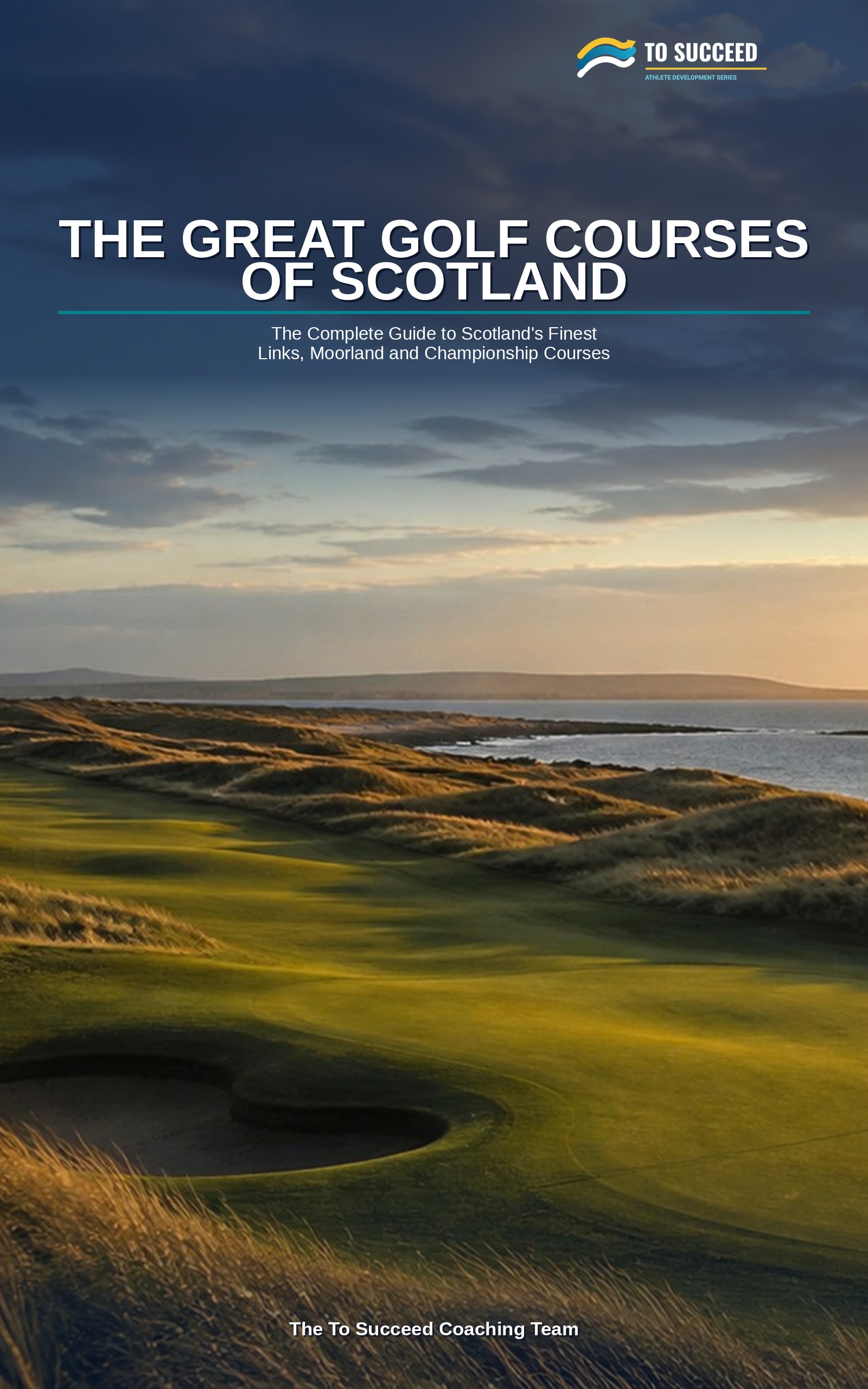
The Great Golf Courses of Scotland (214 pages) is the biggest book in the series — 34 courses across Fife, East Lothian, Ayrshire, Angus, Aberdeenshire, the Highlands, Argyll and the Islands, Perthshire and Loch Lomond, with five regional loops built around genuine driving routes rather than arbitrary groupings.
The Great Golf Courses of England (165 pages) takes in 29 heathland, links and championship courses across nine regions — Royal St George's, Sunningdale, Wentworth, Woodhall Spa, Ganton and Silloth on Solway among them.
Two Surf Guides, Break by Break
The Great Surf Breaks of Ireland (104 pages) profiles 37 named breaks across six regional chapters, each with a quick-facts line covering wave type, swell and wind direction, tide, skill level and season. It also carries a full history of Irish surfing from Kevin Cavey's first board in 1962 onward, and six road-trip loops from a Dublin weekend to a three-week Grand Tour.
The Great Surf Breaks of England (108 pages) covers 41 breaks across thirteen sub-regions, from Cornwall and North Devon to the North Sea breaks of Yorkshire and Northumberland, with a history chapter that runs from an 1890 Bridlington surfing record to Bude's 1953 surf life saving club — the first in Britain.
Three Climbing Guides, Route by Route
Mountain Climbing Ireland (105 pages) works region by region through Dublin and Wicklow, the Mournes, Donegal and the West. Mountain Climbing Scotland (104 pages) runs to 62 numbered entries across Lochaber, Glencoe, Skye, the Far North, Arran and the Southern and Central Highlands, with standalone chapters on winter climbing areas, national parks and the mountain rescue teams that cover them. Mountain Climbing UK (104 pages) covers eight regions and includes a full history of climbing in Britain and Ireland's mountains.
All three are honest about grading, access, parking and where a route stops being a walk and starts being a climb.
And One Dive Guide
Scuba Diving Ireland (124 pages) treats the island as one coastline — 11 regions from Dublin Bay to Malin Head to Strangford Lough, Republic and Northern Ireland together. Depth, visibility, current and skill level for every named site, plus wreck-story chapters on the Lusitania, La Girona, the Laurentic and HMS Audacious, and a law and safety chapter that sets out Ireland's recompression reality in plain terms.
The Rule We Kept
Where a fact was not available, we said so rather than filling the gap. Where a site is genuinely dangerous, we said that too — Mullaghmore Head and Aileen's are flagged as experts and tow-in only, serious winter ground is flagged as serious winter ground, and technical depths in the dive guide are labelled as technical. Honest ratings are worth more than marketing copy when you are the one in the water.